parool

Economic growth in the Amsterdam region no longer guaranteed, situation requires 'drastic choices'

Economic growth in the Amsterdam region no longer guaranteed, situation requires 'drastic choices'

Economic growth in the Amsterdam region is slowing significantly due to infrastructure constraints, labor shortages, and geopolitical risks. The region must now navigate difficult trade-offs regarding land and energy use to maintain its status as a national economic motor.

The Metropolitan Region Amsterdam (MRA) faces a period of cooling economic growth, with projected gains for 2026 and 2027 capped at two percent. According to the Economic Forecast 2026, the region's previous growth lead over the rest of the country has vanished, leaving it vulnerable to geopolitical instability, trade shifts, and environmental factors. Local constraints including severe land scarcity, energy grid congestion, and an aging workforce are intensifying the pressure, forcing a difficult competition for resources between housing, industry, and data centers.

To sustain future prosperity, the report suggests a shift toward knowledge-intensive services while calling for higher labor productivity through innovation and education. Furthermore, the region faces social challenges as the number of households living below the poverty line rises to 69,000. Municipal leaders are urging for ambitious economic policies and increased government investment to address these structural issues. Immediate action regarding the energy transition and infrastructure is described as essential to prevent further long-term economic decline.

Based on reporting by parool. Translated and condensed by LocalHeadlines.
Related articles

Hotel chain Fletcher acquired by international hotel operator

Hotel chain Fletcher acquired by international hotel operator

The Dutch hotel chain Fletcher Hotels has been acquired by international operator Sunday PropTech. The deal includes the purchase of all shares from the previous owner, Egeria, and the company's management.

Fewer packages from Asia for PostNL, which again advocates for three-day letter delivery in the Netherlands

Fewer packages from Asia for PostNL, which again advocates for three-day letter delivery in the Netherlands

PostNL reports a 32 percent decline in parcel volumes from Asian retailers due to new European customs fees, despite seeing a slight rise in overall quarterly revenue. The company is simultaneously pressing the Dutch government for a transition to three-day mail delivery and seeking 148 million euros in compensation to support the change.

Dutch people ordering far fewer packages from abroad via PostNL

Dutch people ordering far fewer packages from abroad via PostNL

PostNL reports a 32 percent decline in parcel deliveries from outside the EU following the implementation of a new import fee. To cope with shrinking mail volumes, the company has shifted to a two-day standard delivery service and is seeking government support to cover operational costs.

Demand for Chinese cars is surging; German and French manufacturers fall behind

Demand for Chinese cars is surging; German and French manufacturers fall behind

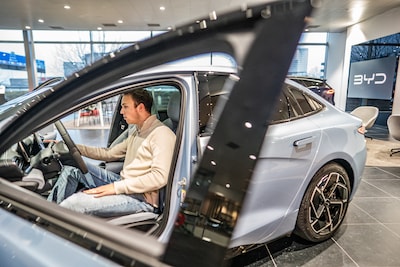
Chinese car sales in the Netherlands have more than doubled this year, significantly impacting traditional European manufacturers. Strong demand for affordable, feature-rich electric and hybrid vehicles, supported by partnerships with local dealers, has propelled China to become a leading player in the Dutch automotive market.

Audi announces first US car factory during Trump election campaign

Audi announces first US car factory during Trump election campaign

Audi has announced a 3.6 billion euro investment to build its first American vehicle manufacturing plant in Georgia, which will create 4,500 jobs and produce 200,000 SUVs annually. President Trump highlighted the investment as a success of his tariff policies, while Audi CEO Gernot Döllner stated the move aims to strengthen the company's global competitiveness.