ad

Kuipers on government role in societal divisions: ‘Without measures, polarization would have been worse’
Kuipers on government role in societal divisions: ‘Without measures, polarization would have been worse’

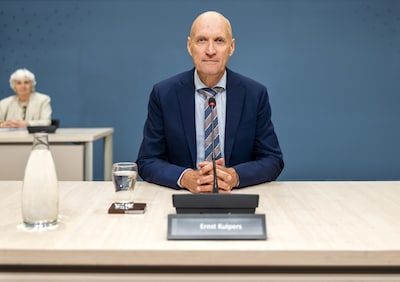
Former Health Minister Ernst Kuipers testified that the Dutch healthcare system avoided 'code black' during the pandemic, ensuring continuous ICU capacity. He stressed the importance of balancing future health measures with their societal impact, particularly on young people, while noting that polarization would likely have worsened without government action.

Former Dutch Minister of Health Ernst Kuipers testified before the parliamentary inquiry committee on the COVID-19 pandemic, stating that the Dutch healthcare system never reached the critical 'code black' status. While the country faced significant challenges and long-term disruption to routine care, such as cancer screenings and organ transplants, Kuipers maintained that ICU capacity remained available throughout the crisis. He reflected on his dual role as head of the National Network for Acute Care and later as a government minister, noting that early projections had warned of potential bed shortages that required careful management.

Kuipers expressed criticism regarding the data provided by the RIVM, citing delays that hindered effective pandemic modeling. He also highlighted the significant societal impact of lockdown measures, particularly on youth, and suggested that future responses should prioritize social well-being. Reflecting on polarization, Kuipers argued that societal division was inevitable but would have been worse without the measures implemented. He concluded by emphasizing that while increasing ICU capacity is worth considering for future crises, non-medical interventions remain essential to prevent the system from being overwhelmed.

Based on reporting by ad. Translated and condensed by LocalHeadlines.

Related articles

City will not appeal against new and broader Schiphol rules, alderman wants enforcement

City will not appeal against new and broader Schiphol rules, alderman wants enforcement

The municipality of Amsterdam will not legally challenge the new national regulations for Schiphol Airport, despite concerns that the rules may increase noise pollution. Councilor Sofyan Mbarki argues that the updated framework provides necessary mechanisms for regulatory enforcement, even though the city acknowledges the rules do not fully align with its local sustainability goals.

Partners and family members to find it easier to request care for loved ones who can no longer do so themselves

Partners and family members to find it easier to request care for loved ones who can no longer do so themselves

As of January 1, 2027, family members in the Netherlands will be permitted to apply for long-term care on behalf of relatives who are unable to do so themselves. This policy change aims to eliminate bureaucratic obstacles and provide faster access to essential support for those suffering from conditions like dementia.

Years of illegal use of Schiphol: environmental groups and local residents take legal action over cabinet plans

Years of illegal use of Schiphol: environmental groups and local residents take legal action over cabinet plans

A coalition of environmental groups and residents has challenged new government regulations for Schiphol Airport at the Council of State. The plaintiffs claim the rules legitimize years of illegal operations and are seeking a mandatory reduction in flight numbers.

Support for chemsex issues collapses after closure of Stichting Mainline

Support for chemsex issues collapses after closure of Stichting Mainline

The closure of Stichting Mainline has severely limited accessible support services for individuals in Amsterdam facing problems related to chemsex. Healthcare providers are now sounding the alarm, warning that the loss of this specialized care leaves a vulnerable group without adequate prevention and assistance.

Health Minister Hermans after SGP motion: Parties are attacking abortion rights, I will continue to defend them

Health Minister Hermans after SGP motion: Parties are attacking abortion rights, I will continue to defend them

Health Minister Sophie Hermans is facing criticism and a motion of disapproval from the SGP for refusing to stop an exploration into abortion procedures performed between 22 and 24 weeks of pregnancy. Hermans maintains that the project is legal and necessary, despite the political fallout that threatens the SGP's support for the government's budget.