parool

Designer Maartje Prins (51) on her Dutch Theatre Festival nomination for Teckel: 'I saw exactly how the child from the text ends up under, yes, a sweaty, puffing, dirty old man'
Designer Maartje Prins (51) on her Dutch Theatre Festival nomination for Teckel: 'I saw exactly how the child from the text ends up under, yes, a sweaty, puffing, dirty old man'

Designer Maartje Prins and actress Jatou Sumbunu have received award nominations for the production Teckel, a monologue addressing child abuse that uses striking stage design and humor. Meanwhile, the performance Frank and the dramaturgs' association Motorisch Moment were also honored for their significant contributions to the Dutch theatre season.

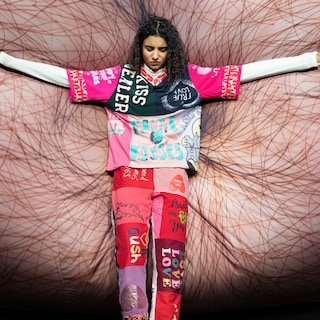
Set designer Maartje Prins has been nominated for a prestigious design award for her work on the theatre monologue Teckel, written by Nina van Tongeren. The centerpiece of the production is a large, inflatable prop depicting a grotesque, hairy male belly, designed to confront the audience with the reality of child abuse. Prins collaborated closely with actress Jatou Sumbunu, who is also nominated for an award for her powerful performance. The production, which was staged at Theater Bellevue in Amsterdam, intentionally blends heavy subject matter with dark humor to engage the audience, sometimes requiring on-site support for viewers affected by the intense content.

In addition to the success of Teckel, other Dutch theatre works are receiving recognition, including the performance Frank by Cherish Menzo, which explores themes related to the black body and colonial history. Furthermore, the professional association for dramaturgs, Motorisch Moment, has been awarded the Prosceniumprijs for their contributions behind the scenes. These recognitions highlight the diverse talent and critical discussions currently shaping the Dutch performing arts landscape.

Based on reporting by parool. Translated and condensed by LocalHeadlines.
Related articles

Either Zwarte Piet or we’re out: The Sinterklaasjournaal almost went under

Either Zwarte Piet or we’re out: The Sinterklaasjournaal almost went under

Het Sinterklaasjournaal has been a consistent Dutch television tradition for twenty-five years, though it has faced significant pressure and near-cancellation due to the ongoing Zwarte Piet controversy. The creator of the program describes the annual process as an intense experience that has defined their professional life for over two decades.

At Queer Tattoo Fest in De Hallen, you are the norm instead of the exception

At Queer Tattoo Fest in De Hallen, you are the norm instead of the exception

De Hallen in Amsterdam is hosting the second edition of the Queer Tattoo Fest this weekend, drawing hundreds of participants from around the world. The event aims to provide a safe, inclusive environment where queer individuals can receive tattoos from fellow members of the community.

Austrians find a natural partner in the beaver in the fight against drought

Austrians find a natural partner in the beaver in the fight against drought

In Linz, Austria, volunteers are using imitation beaver dams to restore water levels and biodiversity in a stream affected by severe drought. Research suggests that the presence of beavers, who are making a comeback across Europe including in the Netherlands, provides crucial ecological benefits by retaining water and sequestering carbon.

K3 cancels performance: Hanne Verbruggen starts maternity leave early

K3 cancels performance: Hanne Verbruggen starts maternity leave early

K3 member Hanne Verbruggen has started her maternity leave earlier than planned, leading to the cancellation of an upcoming performance in Apeldoorn. Former member Klaasje Meijer will return to the group temporarily to replace Verbruggen during her absence.

'I studied, so it makes sense that I earn more': how fair is that really?

'I studied, so it makes sense that I earn more': how fair is that really?

Political scientist and journalist Anouk Kootstra questions the fairness of the traditional belief that higher education and professional status inherently justify higher pay. She challenges the assumption that desk-based roles inherently require more effort or value than manual labor positions like mail delivery.