ad

Jetten promises to re-examine the deteriorating purchasing power of workers: 'Work must pay'
Jetten promises to re-examine the deteriorating purchasing power of workers: 'Work must pay'

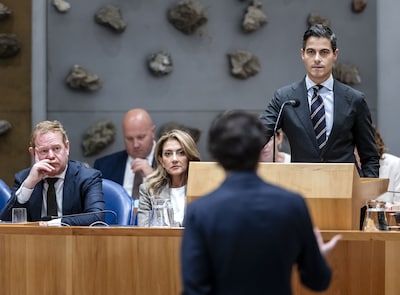
Prime Minister Rob Jetten is seeking cross-party support to stabilize his minority government and pass the budget following the General Political Debates. While facing skepticism from opposition parties, Jetten remains committed to finding collaborative solutions, including addressing the purchasing power of working citizens.

Following the General Political Debates, Prime Minister Rob Jetten is seeking support from opposition parties to secure his minority cabinet's budget. Despite pressure from opposition leaders like Jesse Klaver and Joost Eerdmans to form a clear coalition path, Jetten intends to keep his options open and negotiate on a case-by-case basis. While a motion of no confidence from the PVV failed, the government faces a challenging path ahead to pass essential legislation.

Throughout the debates, Jetten committed to revisiting the purchasing power of workers to ensure that labor remains financially rewarding. Discussions also touched upon nitrogen reduction plans and the potential establishment of an AI safety institute. Although the cabinet remains optimistic about finding enough support to avoid a political standstill, the coming weeks will be critical as the government attempts to build stable agreements with various parliamentary factions.

Based on reporting by ad. Translated and condensed by LocalHeadlines.

Related articles

Dutch people in Silicon Valley also feel impact of Donald Trump’s policies: 'Tariffs are very chaotic'

Dutch people in Silicon Valley also feel impact of Donald Trump’s policies: 'Tariffs are very chaotic'

Dutch expatriates working in Silicon Valley have expressed concerns regarding the unpredictable policies of Donald Trump, citing chaotic trade tariffs and sudden budget freezes. As the midterm elections approach, these professionals continue to navigate the professional challenges posed by the current administration's political climate.

Phasing out fossil fuels is a priority for the Netherlands at climate summit

Phasing out fossil fuels is a priority for the Netherlands at climate summit

The Dutch government has prioritized the phase-out of fossil fuels for the upcoming COP31 climate summit in Antalya. Minister Stientje van Veldhoven confirmed the nation will present its national roadmap to minimize fossil fuel consumption by 2050 while focusing on the implementation of international climate agreements.

Fear of wolves grips Drenthe: I fear for my children and for myself

Fear of wolves grips Drenthe: I fear for my children and for myself

Mayors in Drenthe have issued an urgent plea to the Dutch government to manage the growing wolf population, citing increased fear among residents and safety concerns in residential areas. The officials propose limiting wolves to specific nature reserves and implementing active management, including potential culling, to protect citizens and their communities.

Britons in cheaper housing to receive £100 for high energy costs

Britons in cheaper housing to receive £100 for high energy costs

The British government is providing a 100-pound payment to twenty million residents to offset high energy costs, funded by increased taxes on various sectors. Meanwhile, the Netherlands is establishing a nearly 200-million-euro emergency energy fund to assist half a million low-income households starting in January.

Dutch companies must help Ukraine through the winter: millions in extra government subsidies

Dutch companies must help Ukraine through the winter: millions in extra government subsidies

The Dutch government is providing 191 million euros in subsidies to help Dutch companies support Ukraine's energy infrastructure and facilitate business reconstruction. Minister Sjoerd Sjoerdsma announced the funding during a visit to Kyiv, highlighting that Dutch businesses will be incentivized to assist with essential repairs and long-term recovery projects.