nu

Fewer oil tankers sailing through Strait of Hormuz
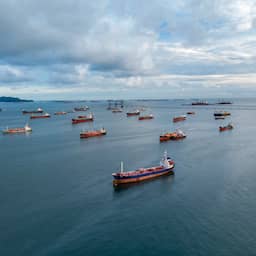
Fewer oil tankers sailing through Strait of Hormuz

Shipping traffic through the Strait of Hormuz has dropped significantly following a blockade linked to rising tensions between Iran and the United States. The resulting supply chain disruption has led to record-high fuel prices and increased energy costs for consumers globally.

Shipping data indicates a significant decline in traffic through the Strait of Hormuz, with only twelve vessels recorded passing through on Monday compared to 35 over the previous weekend. Before the conflict between Iran and the United States, roughly 125 commercial ships traversed the strait daily, facilitating the transport of one-fifth of the world's oil and liquefied natural gas. While some producers continue to export by disabling transponders, visible traffic remains at a minimum as hundreds of tankers have been stranded due to the blockade.

The ongoing disruption in this critical maritime chokepoint has caused global energy prices to surge. This has directly impacted consumers, leading to record-high fuel costs at the pump, with diesel reaching 2.824 euros per liter and gasoline climbing to 2.712 euros. These figures, reported by UnitedConsumers, reflect the broader economic consequences of the blocked trade route, which continues to limit the movement of essential energy supplies to international markets.

Based on reporting by nu. Translated and condensed by LocalHeadlines.

Related articles

250 euros an hour but the mold keeps growing: Eugène (59) suddenly sees the painful gap

250 euros an hour but the mold keeps growing: Eugène (59) suddenly sees the painful gap

Interim manager Eugène observes a growing disconnect between professional service providers and the urgent needs of citizens, such as unaddressed mold issues in homes. Alongside employment expert Anne-Marije Buckens, he points to the widening gap between high-cost services and the actual quality of life for those they are intended to help.

Port of Amsterdam applies for permits for eight wind turbines

Port of Amsterdam applies for permits for eight wind turbines

The Port of Amsterdam has applied for permits to install eight 200-meter-tall wind turbines in the Western Port area to increase regional renewable energy production. The Province of North Holland will now review the applications, though approval is not guaranteed given recent regional political conflicts over wind energy projects.

Dutch petrol prices continue to fall, approaching 2.45 euros

Dutch petrol prices continue to fall, approaching 2.45 euros

Petrol prices in the Netherlands have continued their downward trend, with the recommended price for Euro95 reaching approximately 2.45 euros per liter. This decrease follows a record high observed in early October, while diesel prices have also seen a modest decline.

NVIDIA CEO had close relationship with woman who turned out to be Chinese spy

NVIDIA CEO had close relationship with woman who turned out to be Chinese spy

NVIDIA CEO Jensen Huang is facing a congressional investigation after reports linked him to a woman identified as a Chinese spy. While the company denies any romantic involvement, officials are concerned about potential security risks due to Jensen Huang's role as an advisor to the American president.

Amsterdam water board tax to rise by 4 percent every year until 2050: 'It is not a pleasant message'

Amsterdam water board tax to rise by 4 percent every year until 2050: 'It is not a pleasant message'

The Amstel, Gooi en Vecht water board plans to raise water taxes by 4 percent every year until 2050 to manage long-term infrastructure costs. Authorities have warned residents that they must adapt to these consistent annual increases.