nu

Robin Williams' daughter angry over AI videos of father: 'He is not a puppet'

Robin Williams' daughter angry over AI videos of father: 'He is not a puppet'

Zelda Williams has publicly condemned the creation of AI-generated videos featuring her late father, Robin Williams, describing the content as inaccurate and exploitative. She emphasized that her father's likeness should not be used for personal agendas and vowed to continue defending his legacy against such unauthorized portrayals.

Zelda Williams, the daughter of the late actor Robin Williams, has expressed intense frustration regarding the unauthorized use of artificial intelligence to create videos of her father. She recently criticized a specific AI-generated clip in which a digital recreation of the comedian discusses conspiracy theories. Describing the audio as robotic and unconvincing, she urged creators to stop exploiting his likeness to promote their personal narratives. She emphasized that her father, who passed away in 2014, should be allowed to rest, asserting that he would have been appalled by such misrepresentations and would have likely taken legal action against those responsible.

This incident is not the first time Zelda has campaigned against the AI manipulation of her father's image. She has previously requested that fans refrain from sending her such content and has used social media platforms to protect his legacy. By speaking out, she aims to ensure that the public recognizes the difference between genuine archival footage and modern synthetic fabrications. Her efforts are intended to honor the actor's memory and prevent his persona from being used as a tool for misinformation.

Based on reporting by nu. Translated and condensed by LocalHeadlines.

Related articles

Screen time | AI clones, generating podcasts: how human does journalism remain?

Screen time | AI clones, generating podcasts: how human does journalism remain?

The integration of AI into journalism is raising significant questions about the future of the profession, as media organizations experiment with AI-cloned presenters and automated content production. While some view these tools as efficient aids for data analysis and editing, critics caution against the risks of misinformation, job loss, and the loss of human nuance in reporting.

Netflix to release prequel to hit series Stranger Things in 2028

Netflix to release prequel to hit series Stranger Things in 2028

Netflix has officially announced a prequel to the hit series Stranger Things, scheduled for release in 2028. The upcoming show will feature a new cast and setting, taking place in 1955 within a fictional Nevada town with returning creators Matt and Ross Duffer as producers.

Neighborhood receives fake letter with municipal logo about Sloterdijk data center: "It doesn't feel quite right"

Neighborhood receives fake letter with municipal logo about Sloterdijk data center: "It doesn't feel quite right"

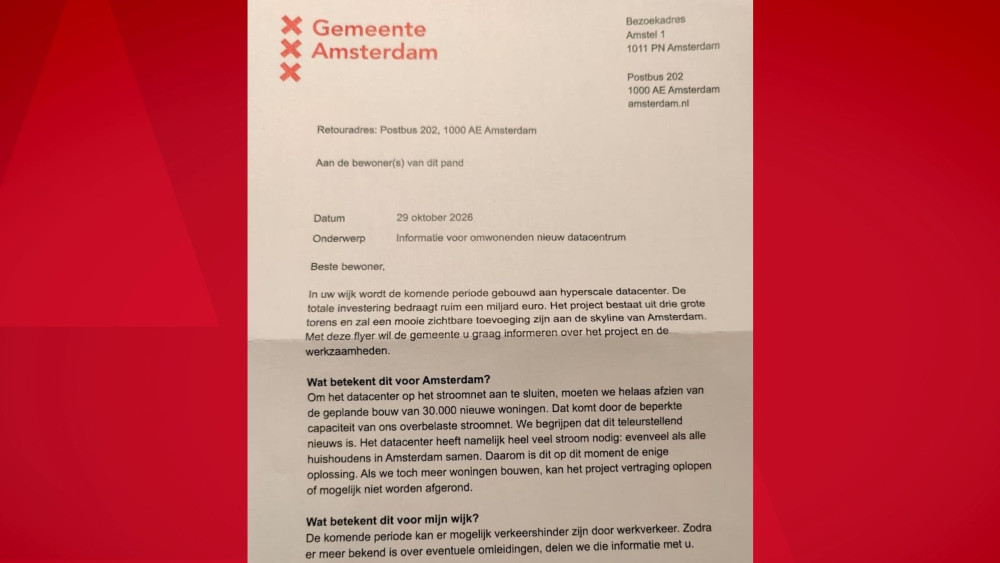
Residents in the Amsterdam neighborhood of Sloterdijk have received fraudulent letters falsely claiming to be from the city government regarding a planned data center. The letters contained incorrect information about power supply issues and housing developments, which city officials have since officially denied.

Spotify rival Deezer struggles with 90,000 AI songs per day: It is not for us to determine what is good music

Spotify rival Deezer struggles with 90,000 AI songs per day: It is not for us to determine what is good music

Music streaming service Deezer is struggling to manage the daily influx of 90,000 AI-generated songs on its platform. Despite implementing strict discouragement policies, the company notes that automated bots continue to drive up the volume of artificial content.

PRO wants an end to online manipulation: Boys are being aggressively targeted by gambling sites

PRO wants an end to online manipulation: Boys are being aggressively targeted by gambling sites

Member of Parliament Barbara Kathmann is introducing a bill to combat addictive digital algorithms and manipulative practices that target young people. The legislation aims to restrict features like endless scrolling and predatory marketing by gambling sites to protect the mental health of users.