Eva Besnyö (1910-2003) became famous for her photo of the boy with the double bass, but a major exhibition at the Hague Museum of Photography shows how much more she had to offer
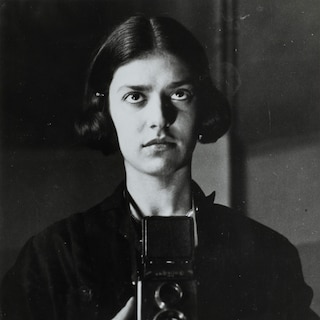
A new exhibition at the Hague Museum of Photography chronicles the life and work of photographer Eva Besnyö, ranging from her early avant-garde experiments in Berlin to her later involvement in the Dutch feminist movement. The showcase notably features long-hidden images of the aftermath of the 1940 Rotterdam bombardment, providing a deeper look at her complex artistic and personal evolution.
The Hague Museum of Photography is hosting a comprehensive exhibition titled De bevrijde camera, highlighting the expansive career of photographer Eva Besnyö. The display includes previously unshown photographs she captured in Rotterdam following the 1940 bombardment, images she once avoided due to their aesthetic beauty amidst wartime devastation. The collection marks a pivotal point in her life, transitioning from the stylistic avant-garde of her Berlin years to her later work as a feminist activist.
Born in Hungary, Besnyö rose to fame in the 1930s with her iconic portrait of a boy with a double bass. Influenced by the New Photography movement in Berlin, her early work focused on geometry and composition, eventually leading her to establish herself in Amsterdam after fleeing political oppression. Later, she became the key documentarian for the Dutch feminist movement, Dolle Mina, during the 1970s. This exhibition not only celebrates her technical mastery but also serves as an important record of her role in capturing both the architectural progress of the pre-war era and the social changes of the post-war period.
Based on reporting by parool. Translated and condensed by LocalHeadlines.