nu

Living and working in Japan indefinitely is now twenty times more expensive

Living and working in Japan indefinitely is now twenty times more expensive

Japan has drastically increased the costs for residency applications and introduced stricter financial and language requirements for foreigners. These measures, championed by Prime Minister Sanae Takaichi, reflect growing societal concerns regarding immigration as the country faces significant demographic challenges.

Japan has implemented a significant increase in visa and residency application costs, with fees for some permits rising twenty-fold to 200,000 yen. Alongside the price hikes, authorities have introduced stricter financial requirements, mandating that applicants prove they possess a stable income comparable to the national average and hold pension assets equivalent to thirty years of contributions. Starting next April, proficiency in the Japanese language will also become a mandatory requirement for applicants, leading to a surge in interest for language courses. Existing fees for extending or modifying residency statuses have also seen increases. Prime Minister Sanae Takaichi introduced these measures amid rising anti-immigration sentiment and concerns regarding social security and public safety as the foreign population in Japan continues to grow. These policy shifts occur while the nation simultaneously grapples with a rapidly aging demographic and a shrinking labor force, creating significant economic pressure on the country's social welfare systems.

Based on reporting by nu. Translated and condensed by LocalHeadlines.

Related articles

German government to fill gas reserves due to uncertain situation

German government to fill gas reserves due to uncertain situation

Germany has ordered an increase in its national gas reserves to ensure supply stability during the upcoming winter amid geopolitical concerns. Meanwhile, the Netherlands is also monitoring its lower-than-usual storage levels, with experts warning that current emergency stockpiles might be insufficient for prolonged disruptions.

AI companies to increase model oversight according to Trump

AI companies to increase model oversight according to Trump

President Trump has reached a voluntary agreement with major AI companies, including OpenAI and Google, to implement robust internal and external safety controls. The strategy avoids strict government regulation to keep American tech firms globally competitive and includes the upcoming appointment of a dedicated AI advisor.

Netherlands and five other countries want deep cuts to EU budget

Netherlands and five other countries want deep cuts to EU budget

The Netherlands and five other EU nations are calling for a significant reduction in the European Union's seven-year budget proposal. These countries want to reallocate funds away from agriculture and regional support toward defense and innovation, setting the stage for difficult negotiations with other member states.

Trial successful: over 60 percent of Amsterdam asylum seekers find a job or take steps toward paid employment

Trial successful: over 60 percent of Amsterdam asylum seekers find a job or take steps toward paid employment

A successful pilot program in Amsterdam has helped over 60 percent of participating asylum seekers find employment or make progress toward securing a job since 2025. Due to these positive results, the initiative, which primarily placed participants in the hospitality, logistics, and transport sectors, will be continued.

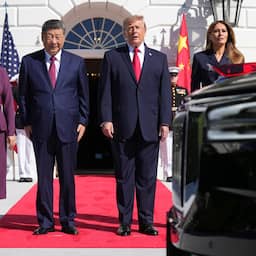
China and US pledge to keep each other informed on AI incidents

China and US pledge to keep each other informed on AI incidents

The United States and China have established a communication channel to address incidents involving artificial intelligence, prompted by recent reports of autonomous AI model breaches. This agreement was reached during President Xi Jinping's visit to Washington, where the two nations also finalized coal import deals and extended a key trade truce.