ad

Cabinet opens purse strings to tackle poor regional accessibility: 300 million for self-driving buses and more
Cabinet opens purse strings to tackle poor regional accessibility: 300 million for self-driving buses and more

The Dutch government plans to invest 300 million euros annually from 2030 to improve regional public transport accessibility and address staff shortages. Key measures include testing autonomous buses and centralizing demand-responsive transport services to replace lost transit routes.

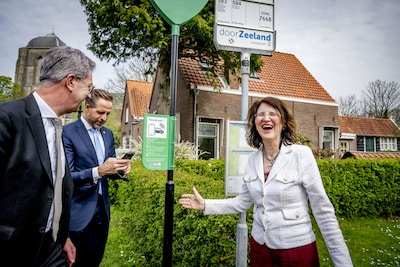
The Dutch government has announced a plan to allocate 300 million euros annually starting in 2030 to combat declining regional public transport accessibility. State Secretary Annet Bertram intends to address staff shortages and service gaps by investing in autonomous buses and centralizing coordination for demand-responsive transport, such as taxis and neighborhood buses. These measures aim to counteract the recent loss of over 1100 bus stops nationwide, which has particularly hindered elderly people and students living in rural areas or city peripheries. By implementing integrated transit systems that pool resources for various user groups, the government hopes to create more efficient alternatives to traditional fixed-route services. Furthermore, the ministry is exploring innovative approaches to make transit more affordable and encourage travel outside of peak hours. This strategy emphasizes central government leadership and technological innovation over simply increasing funding for conventional bus and tram networks, which struggle with both overcrowding and underutilized off-peak capacity.

Based on reporting by ad. Translated and condensed by LocalHeadlines.

Related articles

Norway to temporarily ban AI glasses in crowded places

Norway to temporarily ban AI glasses in crowded places

Norway is introducing a temporary ban on AI smart glasses in busy public spaces due to privacy concerns regarding unauthorized recording. The Netherlands is also debating the issue, with local retailers pulling the products from shelves as the government investigates potential legal restrictions.

Cabinet plan to protect children online: 'They are facing unacceptable risks'

Cabinet plan to protect children online: 'They are facing unacceptable risks'

The Dutch government has unveiled a new strategy to protect children online, focusing on curbing harmful social media design, evaluating an EU-wide age limit for platforms, and banning mobile phones in all schools. The initiative also prioritizes combatting online radicalization among youth and ensuring that future digital safety measures involve input from both parents and children.

Screen Time | Trump fans the AI flames further as regulations remain absent

Screen Time | Trump fans the AI flames further as regulations remain absent

President Donald Trump and tech executives have agreed to a set of voluntary safety standards for artificial intelligence, though critics argue that self-regulation is insufficient compared to formal legislation. Meanwhile, domestic news includes the arrest of a Dutch hacker and the launch of a new cycling weather app in Amsterdam.

'Smart glasses' under fire: Parliament wants stricter ban and lawsuits threaten

'Smart glasses' under fire: Parliament wants stricter ban and lawsuits threaten

The Dutch House of Representatives is seeking stricter regulations on smart glasses that record audio and video, citing significant privacy concerns. Simultaneously, consumer rights organizations have threatened legal action against Meta, demanding a stop to sales of the devices unless privacy protections are improved.

Amsterdam wants to phase out US big tech software, but how do you approach that?

Amsterdam wants to phase out US big tech software, but how do you approach that?

The Amsterdam municipal government is launching a plan to gradually replace software from major American tech firms due to concerns over digital dependency and security. With Dutch municipalities currently spending 185 million euros annually on Microsoft, the city aims to transition toward more independent and sovereign technology solutions.