ad

Net contributors and net recipients completely at odds over EU budget: ‘Out of touch and appalling’
Net contributors and net recipients completely at odds over EU budget: ‘Out of touch and appalling’

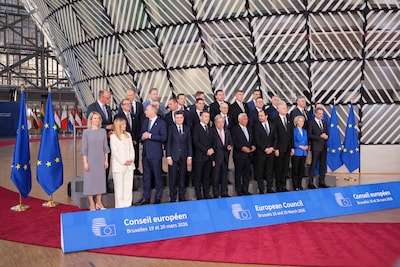
European Union member states are divided over the next long-term budget, with net-recipients demanding increased spending and the removal of contribution rebates for wealthier nations. Conversely, net-contributor countries are pushing for deep budget cuts, labeling the recipients' demands as unrealistic while refusing to increase their own financial commitments.

Tensions within the European Union have reached a boiling point as member states clash over the upcoming long-term budget. A coalition of net-recipient countries, including Italy, Spain, and Poland, has formally requested a significant budget increase, arguing that the EU must address growing challenges without cutting agricultural or regional support. They are also calling for the elimination of budget rebates currently enjoyed by wealthier nations like the Netherlands.

In response, a group of net-contributor states, including the Netherlands, Germany, and Denmark, has dismissed these demands as unrealistic. These nations argue that their contributions are already disproportionately high and are pushing for deep budget cuts across all sectors to fund new priorities like migration and security. As Ireland works to mediate the impasse, the gap between the two sides remains substantial, with negotiations expected to intensify in the coming months as the EU seeks a viable path toward a final agreement.

Based on reporting by ad. Translated and condensed by LocalHeadlines.

Related articles

Euro hits seventeen-month low due to political unrest in Europe

Euro hits seventeen-month low due to political unrest in Europe

The euro has hit a seventeen-month low against the dollar due to mounting political and economic instability in France and Spain. Experts warn that this European market volatility and rising debt concerns could eventually exert upward pressure on Dutch mortgage rates.

Norway to temporarily ban AI glasses in crowded places

Norway to temporarily ban AI glasses in crowded places

Norway is introducing a temporary ban on AI smart glasses in busy public spaces due to privacy concerns regarding unauthorized recording. The Netherlands is also debating the issue, with local retailers pulling the products from shelves as the government investigates potential legal restrictions.

Dutch royal house earned over half a billion euros from colonial past

Dutch royal house earned over half a billion euros from colonial past

A historical study has revealed that the Dutch royal house accumulated over 566 million euros from colonial activities in the East Indies, West Africa, and the Americas between 1600 and 2025. While the monarchy gained significant wealth and prestige from these colonial ties, researchers found that their involvement in the trans-Atlantic slave trade yielded minimal financial success.

Amsterdam scraps neighborhood budgets: residents can no longer vote on local funding

Amsterdam scraps neighborhood budgets: residents can no longer vote on local funding

The City of Amsterdam is ending its neighborhood budget program, which allowed residents to vote on local improvement projects, due to limited resources and difficulties in reaching a broader demographic. While the specific budget scheme is being terminated, the city maintains that the designated funds will be redirected toward other democratization efforts, such as citizen assemblies.

German government to fill gas reserves due to uncertain situation

German government to fill gas reserves due to uncertain situation

Germany has ordered an increase in its national gas reserves to ensure supply stability during the upcoming winter amid geopolitical concerns. Meanwhile, the Netherlands is also monitoring its lower-than-usual storage levels, with experts warning that current emergency stockpiles might be insufficient for prolonged disruptions.