parool

Report: old transgender law led to deep human suffering
Report: old transgender law led to deep human suffering

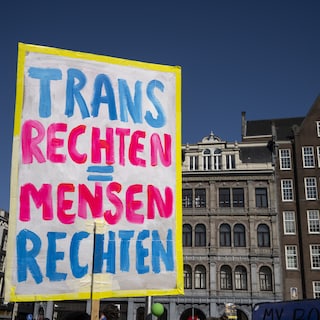
A historical study commissioned by the Dutch government reveals that the country's former transgender law caused profound human suffering by forcing individuals to undergo irreversible sterilization and unwanted procedures to change their legal gender. Advocates are now calling on lawmakers to learn from these human rights violations and support updated legislative efforts to protect the rights of transgender and intersex citizens.

A new report from Radboud University, commissioned by the Ministry of Education, Culture and Science, has detailed the significant human suffering caused by the former Dutch transgender law. By examining historical records and conducting 28 in-depth interviews, researchers found that the previous legislation imposed strict, damaging requirements on those seeking to change their legal gender registration. These included forced sterilization and the requirement to be unmarried, which often forced individuals to undergo life-altering surgeries against their wishes or dissolve their marriages to obtain valid identification documents.

Researchers and advocates highlight that these state-mandated practices violated human rights and resulted in long-term psychological, physical, and social trauma for many individuals. Following the release of the report, Transgender Netwerk chair Remke Verdegem has urged politicians to learn from this history and support current legislative updates. While the state previously issued formal apologies in 2021, the findings emphasize the lasting impact of policies driven by outdated social views and the fear of hypothetical misuse.

Based on reporting by parool. Translated and condensed by LocalHeadlines.

Related articles

Phone ban at school may backfire: 'Young people compensate with screen time at home'

Phone ban at school may backfire: 'Young people compensate with screen time at home'

Starting January 1, the Dutch government plans to expand the mobile phone ban in schools to include playgrounds and break times. While the policy aims to curb distractions, experts caution that it could increase social isolation and lead students to compensate for lost screen time at home.

Cabinet eases rules for remains: resomation and sharing a coffin allowed

Cabinet eases rules for remains: resomation and sharing a coffin allowed

The Dutch government is seeking to modernize burial laws to allow for resomation, a sustainable liquid-based decomposition process. Additionally, the proposal includes new options for couples to be buried or cremated together in a single coffin or to inter a partner's ashes within a grave.

Concerns in Haarlemmermeer as emergency care moves to Haarlem

Concerns in Haarlemmermeer as emergency care moves to Haarlem

The Spaarne Gasthuis will move its emergency and inpatient services from Hoofddorp to a new location in Haarlem by 2033 to better manage staffing shortages. Local officials in Haarlemmermeer are critical of the decision, fearing that the loss of full-service care will negatively impact the region's rapidly growing population.

Ajax striker Kasper Dolberg out for the season with torn cruciate ligament

Ajax striker Kasper Dolberg out for the season with torn cruciate ligament

Ajax striker Kasper Dolberg will miss the rest of the season due to a torn cruciate ligament sustained during national team training. The 29-year-old will relocate to Amsterdam to undergo his rehabilitation process following successful surgery.

Alcohol-monitoring anklet to be introduced for alcohol-fueled violence and DUI offenders

Alcohol-monitoring anklet to be introduced for alcohol-fueled violence and DUI offenders

The Dutch parliament is moving to introduce mandatory alcohol-monitoring ankle bracelets for offenders convicted of alcohol-fueled violence or severe traffic offenses. The device will monitor alcohol consumption 24/7 via skin sweat samples, providing a more reliable alternative to traditional periodic testing.