AI is changing the workplace but will not lead to mass unemployment
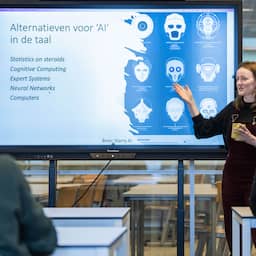
Recent research from the AWVN indicates that 95 percent of employers are now using AI, primarily to increase efficiency rather than to reduce their workforce. While experts anticipate that some job functions will disappear over the long term, they emphasize that this transition will not lead to mass unemployment as new roles and tasks are expected to emerge.
Research from the Dutch employers' association AWVN reveals that the use of artificial intelligence in the workplace has nearly doubled since 2024, with 95 percent of surveyed employers currently utilizing the technology. While most companies intend to further expand their AI integration to boost efficiency and quality, experts emphasize that this shift is not resulting in mass unemployment. Instead of reducing staff, employers are primarily using AI as a tool to streamline processes, though they recognize that human oversight remains essential for accuracy and security.
Labor sociologist Fabian Dekker and AWVN researcher Elvira Kas both predict that while specific job tasks may evolve or disappear over the next decade, AI will ultimately lead to the creation of new roles rather than a jobless economy. Many employers are already investing in training programs to help staff adapt to these changes. However, experts warn that businesses must provide more targeted guidance and education to ensure that all employees can effectively navigate the transition and stay relevant in an increasingly automated professional landscape.
Based on reporting by nu. Translated and condensed by LocalHeadlines.