ad

Global stock markets fall on AI concerns
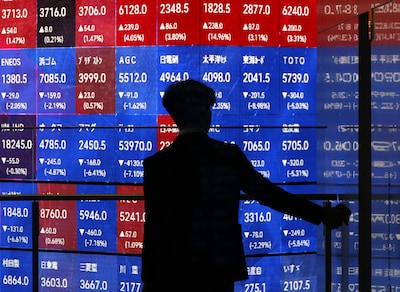
Global stock markets fall on AI concerns

Global stock markets have experienced significant declines driven by growing investor anxiety over debt levels and potential demand slowdowns in the artificial intelligence sector. Major indices, including the Nasdaq and various Asian benchmarks, saw substantial losses as chipmakers and tech-related stocks faced a worldwide sell-off.

Global stock markets experienced significant declines this week as investors grew increasingly concerned about the debt levels within the artificial intelligence sector. In New York, the tech-heavy Nasdaq index fell by 1.3 percent following a 1.9 percent drop the previous day, marking its worst performance since July. The broader S&P 500 also retreated as shares in major chipmakers like Nvidia and Intel saw notable losses due to fears that a slowdown in AI infrastructure development might reduce future demand for specialized hardware.

The sell-off was even more pronounced across Asian markets, where the Nikkei index in Japan plunged 4.9 percent. South Korea’s Kospi index suffered a dramatic 7.6 percent decline, fueled by substantial losses for major technology companies Samsung and SK Hynix. Investors appear anxious about the financial sustainability of rapid expansion in the AI industry, evidenced by rising financing costs for prominent tech investors. While some firms like TSMC managed to limit their losses, the overall market sentiment remains bearish amid widespread uncertainty.

Based on reporting by ad. Translated and condensed by LocalHeadlines.

Related articles

Empty shelves, saunas in the coolers: our essential services are vulnerable to cyber incidents

Empty shelves, saunas in the coolers: our essential services are vulnerable to cyber incidents

The grocery sector is increasingly facing cybersecurity threats, leading to incidents such as empty store shelves and malfunctioning cooling equipment. Experts warn that these vulnerabilities in essential services could cause further public instability if security measures are not improved.

EU selects 46 raw materials projects to reduce dependence on China

EU selects 46 raw materials projects to reduce dependence on China

The European Commission has launched 46 projects across sixteen countries to reduce reliance on China for vital raw materials like lithium and copper. These initiatives, supported by prioritized permits and funding assistance, aim to significantly boost domestic processing and recycling capacity by 2030.

Electric cars are driving further into Europe, but watch out for hidden costs in France

Electric cars are driving further into Europe, but watch out for hidden costs in France

Dutch electric vehicle drivers are increasingly traveling further across Europe, but the ANWB warns that hidden costs like blocking fees remain a problem in countries such as France. Drivers are advised to check tariff details in charging apps to avoid significant unexpected charges for staying connected to a station after a battery is full.

IMF: Public debt, energy demand and energy prices threaten global economy

IMF: Public debt, energy demand and energy prices threaten global economy

The IMF has warned that the global economy faces significant threats from rising national debt, increasing energy demand driven by AI, and high energy prices. These economic pressures are creating growing inequality between nations, prompting the organization to call for immediate international policy action.

Banks must reimburse phishing victims within one working day, even if the customer made a serious mistake

Banks must reimburse phishing victims within one working day, even if the customer made a serious mistake

The European Court of Justice has ruled that banks must immediately reimburse victims of phishing attacks by the end of the next working day, even if the bank suspects the client of gross negligence. Banks may only withhold or recover these funds if they can provide clear evidence that the customer was personally involved in fraudulent activity.