parool

Henk Schiffmacher gives tattoos at the Rembrandt House: 'This is the only art you take to the grave'
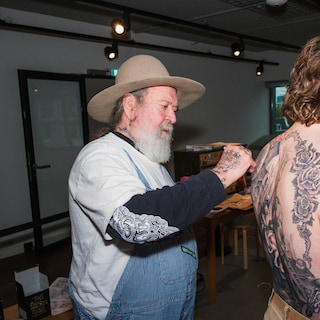
Henk Schiffmacher gives tattoos at the Rembrandt House: 'This is the only art you take to the grave'

Tattoo artist Henk Schiffmacher is collaborating with the Rembrandt House Museum in Amsterdam to tattoo famous etchings onto clients as part of The Poor Man’s Rembrandt Project. This initiative features both intricate back pieces and smaller designs, aiming to make classical art more accessible to the public during Museum Night.

Tattoo legend Henk Schiffmacher and his studio, Schiffmacher & Veldhoen, have partnered with the Rembrandt House Museum for a unique initiative called The Poor Man’s Rembrandt Project. In anticipation of Museum Night, the studio is tattooing classic Rembrandt etchings onto clients, including a large reproduction of The Descent from the Cross covering the entire back of film school graduate Bo Kwakernaak. The collaboration aims to bridge the gap between traditional museum art and tattoo culture, making historical works more accessible to a modern audience while showcasing the artistry of skin-based masterpieces.

Beyond the large back piece, the tattoo team has set up a temporary studio inside the museum, where visitors can get smaller Rembrandt-inspired designs. The project has garnered significant international media attention, drawing fans from across Europe. Schiffmacher notes that while he carefully adapts the detailed etchings for the skin to ensure they age well, the process remains a tribute to his lifelong admiration for the Dutch master. The partnership highlights a creative approach to museum engagement, turning human skin into a living gallery of classical art.

Based on reporting by parool. Translated and condensed by LocalHeadlines.
Related articles

Documentary maker Mijke de Jong followed Femke Halsema for a year as mayor: I was not out to catch her out

Documentary maker Mijke de Jong followed Femke Halsema for a year as mayor: I was not out to catch her out

Documentary filmmaker Mijke de Jong spent a year following Amsterdam Mayor Femke Halsema for her project titled De burgemeester. The documentary explores the daily responsibilities and public scrutiny faced by the mayor, addressing themes like accessibility and media criticism.

Documentary filmmaker Kiriko Mechanicus (31): ‘In my high school boyfriend’s phone, I was saved as ‘hot Asian chick’’

Documentary filmmaker Kiriko Mechanicus (31): ‘In my high school boyfriend’s phone, I was saved as ‘hot Asian chick’’

Thirty-one-year-old documentary filmmaker Kiriko Mechanicus recently won a Gouden Kalf award for her short film, How to catch a butterfly. In a candid interview, she discussed topics ranging from ethnic fetishization to the performative nature of identity.

Mohamed (34) managed to leave Gaza and now lives in Amsterdam city center: ‘I saw the elephant at Artis and burst into tears’

Mohamed (34) managed to leave Gaza and now lives in Amsterdam city center: ‘I saw the elephant at Artis and burst into tears’

Mohamed Yaghi, a 34-year-old former sound engineer, has relocated to Amsterdam with his family after fleeing the conflict in Gaza. Although he is now safe in the Netherlands, he struggles with the psychological trauma of the war and the difficulty of adjusting to his new life.

Halsema calls homeless shelters a magnet: does repealing the outdoor sleeping ban attract homeless people to Amsterdam?

Halsema calls homeless shelters a magnet: does repealing the outdoor sleeping ban attract homeless people to Amsterdam?

The Amsterdam city council is set to decide on Wednesday whether to abolish the local ban on sleeping outdoors. The debate centers on a disagreement between parties advocating for more humane policies and those who fear the change will attract more homeless people to the city.

More cultural funding to the regions? Halsema warns: "The labor market is in Amsterdam"

More cultural funding to the regions? Halsema warns: "The labor market is in Amsterdam"

Amsterdam Mayor Femke Halsema has warned the Dutch government against diverting cultural subsidies away from the capital, citing the risk of damaging the city's significant creative labor market. She also defended the autonomy of the arts sector, emphasizing that cultural institutions must remain free from political pressure and secure for all visitors.