nu

Ambitious promises abound at climate summits, but they are often quickly forgotten

Ambitious promises abound at climate summits, but they are often quickly forgotten

Ambitious climate pledges made at international summits are frequently weakened or abandoned once the events conclude due to a lack of accountability. While researchers acknowledge that these initiatives help maintain momentum and foster cooperation, they often struggle to achieve concrete results without long-term oversight.

International climate summits frequently produce ambitious promises that are often abandoned once the events conclude. For instance, European Union nations previously committed to phasing out CO2-emitting cars by 2035, yet there is now momentum toward weakening these targets. Similarly, various coalitions regarding methane reduction and corporate climate neutrality have struggled to achieve tangible results or have dissolved entirely. Experts note that while these summits serve as platforms for launching new initiatives, they often lack sufficient mechanisms for transparency, accountability, and long-term follow-up.

Despite these failures, researchers argue that such coalitions provide value by fostering momentum during periods of low political prioritization. Initiatives like the global effort to increase electrification help maintain progress even when national governments retract support. While measuring the direct impact of voluntary agreements remains difficult, supporters emphasize that these gatherings facilitate essential knowledge sharing and collective signaling. However, experts warn that without established institutions to track progress after summit organizers depart, many of these high-profile pledges risk fading into obscurity.

Based on reporting by nu. Translated and condensed by LocalHeadlines.
Related articles

Jetten cabinet spoils things for Klaas Knot in the fight for Europe's most powerful job

Jetten cabinet spoils things for Klaas Knot in the fight for Europe's most powerful job

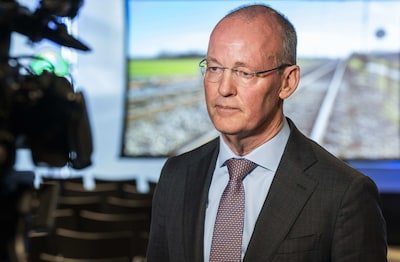
Klaas Knot's chances of becoming the next president of the European Central Bank have declined after France and Germany reportedly agreed to support a Spanish candidate instead. Dutch Prime Minister Rob Jetten was unable to attend a critical European summit in Dublin to lobby for Knot due to a domestic political crisis.

Amsterdam city council takes city back to court to force Schiphol flight cuts against the administration's wishes

Amsterdam city council takes city back to court to force Schiphol flight cuts against the administration's wishes

The Amsterdam city council has voted to initiate legal action against the government's new aviation rules for Schiphol Airport, seeking a reduction in flight numbers and tighter noise controls. Although the city administration prefers to exert influence as an airport shareholder, the council has mandated they join a lawsuit by December 8 to address environmental and noise concerns.

Greta Thunberg reappears at climate summit after years of absence

Greta Thunberg reappears at climate summit after years of absence

Greta Thunberg made an unexpected return to a climate summit in Antalya to criticize world leaders for hypocrisy and the ongoing destruction of the planet. Her appearance was welcomed by Dutch climate youth, who noted that her presence helps stimulate essential discussions that are otherwise neglected by absent officials.

Belgium also sees possible Iranian role in cyberattack on cooling systems

Belgium also sees possible Iranian role in cyberattack on cooling systems

A wave of cyberattacks targeting refrigeration systems in Belgian supermarkets and smaller businesses across Europe is being investigated for potential ties to Iranian hackers. While officials in Belgium are probing these links, Dutch authorities noted that while major supermarket chains remained unaffected, smaller local shops in the Netherlands were hit by the same campaign.

German government to fill extra gas reserves for emergencies

German government to fill extra gas reserves for emergencies

The German government is creating a 24 terawatt-hour strategic gas reserve to protect against future supply disruptions, funded by a small surcharge on household utility bills. While Germany continues to secure its energy needs through alternative imports, the broader European gas reserves remain at their lowest level in ten years.