ad

Coalition vows to 'do everything differently', but Parliament remains skeptical
Coalition vows to 'do everything differently', but Parliament remains skeptical

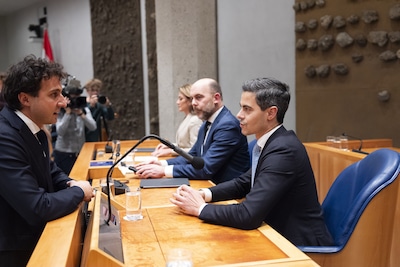
During an eight-hour parliamentary debate, the Dutch coalition attempted to restore confidence in its leadership following a recent government crisis. Despite promises of a new, more transparent approach to parliamentary cooperation, opposition parties expressed deep skepticism, arguing that the government lacks a concrete strategy and continues to face internal divisions.

Following a week of government crisis, the Dutch coalition held an eight-hour parliamentary debate to address concerns regarding the stability of the cabinet. Prime Minister Rob Jetten and the coalition partners insisted that their mutual trust has been restored, yet opposition parties remain highly skeptical, noting that the cabinet’s internal divisions and lack of a clear cooperation strategy appear unchanged. To navigate future legislative challenges, the government has enlisted Sybrand Buma, vice president of the Council of State, to help develop a new financial framework for parliamentary cooperation. This decision has drawn criticism from parties like PRO, ChristenUnie, and BBB, who warn of potential conflicts of interest given Buma's independent role.

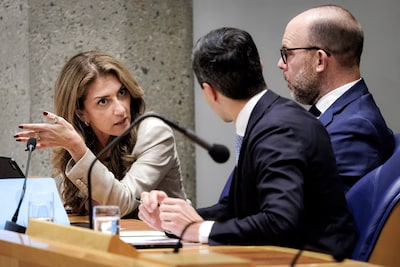
Opposition leaders argue that the coalition is merely using Buma to buy time, as the governing parties still lack a defined strategy for securing majorities. While Prime Minister Jetten promised that the cabinet will explicitly choose negotiation partners in advance for future dossiers, opposition members like Jesse Klaver remain unconvinced. The debate concluded with ongoing uncertainty, as the opposition continues to fear that the political chaos in The Hague will persist.

Based on reporting by ad. Translated and condensed by LocalHeadlines.
Related articles

Yesilgöz, Jetten and Bontenbal cannot solve it alone: what now?

Yesilgöz, Jetten and Bontenbal cannot solve it alone: what now?

Dutch coalition leaders Rob Jetten, Dilan Yesilgöz, and Henri Bontenbal have agreed to a political ceasefire and appointed mediator Sybrand Buma to resolve an ongoing crisis of trust. Despite this temporary reprieve, deep internal divisions and skepticism from the opposition continue to threaten the stability of the cabinet.

Four reasons why the cabinet truce won't hold and one reason why it will

Four reasons why the cabinet truce won't hold and one reason why it will

Political parties D66, VVD, and CDA have agreed to a truce to address internal tensions within the coalition cabinet. Sybrand Buma has been tasked with brokering a long-term peace agreement between the parties despite significant challenges.

Eurostar and Dutch government clash over border police at Amsterdam CS: High demand for London tickets, but we are being hindered

Eurostar and Dutch government clash over border police at Amsterdam CS: High demand for London tickets, but we are being hindered

Eurostar and the Dutch government are clashing over the deployment of border police at Amsterdam Central Station, which is restricting passenger capacity on London-bound trains. The train operator claims these constraints block growth, while the government insists Eurostar must pay for additional security personnel.

More bulk meat deals: 'Discount toilet paper, not animal suffering'

More bulk meat deals: 'Discount toilet paper, not animal suffering'

The number of bulk meat promotions in the ten largest Dutch supermarkets has risen by 18 percent this year, reversing a previous downward trend. Animal welfare group Wakker Dier and the Consumentenbond warn that these offers promote overconsumption and waste, despite ongoing parliamentary discussions regarding a potential ban on such price stunts.

UK imposes sanctions on companies building Israeli settlements

UK imposes sanctions on companies building Israeli settlements

The United Kingdom has imposed sanctions on construction and real estate companies involved in developing Israeli settlements on occupied territory. These measures, which include freezing assets, are intended to curb expansion that critics say threatens the viability of a future Palestinian state.