nu

Unions and employers very gloomy about cabinet's budget plans

Unions and employers very gloomy about cabinet's budget plans

Dutch employers and labor unions have voiced strong criticism of the cabinet's budget plans, citing concerns over economic competitiveness and social security cuts. Employers warn that the current policy hinders investment, while unions are demanding the removal of austerity measures before resuming negotiations with the government.

Employers and trade unions in the Netherlands have expressed significant dissatisfaction with the government's latest budget plans. The employers' association AWVN warned that the proposals fail to sufficiently bolster the nation's economic competitiveness, noting that international businesses are increasingly choosing to invest elsewhere. Consequently, the country risks losing high-quality jobs as it slips down global economic rankings. Meanwhile, major unions including the FNV and CNV have criticized the cabinet's approach to social security. They argue that the budget unfairly targets essential support systems for workers and retirees while failing to adequately address the financial security of households. Union leaders have described the government's fiscal strategy as socially irresponsible and are actively urging lawmakers to reject planned cuts to unemployment and disability benefits. While the government has offered to postpone certain measures to facilitate dialogue, unions maintain that they will not return to the negotiating table unless the current austerity plans are fully withdrawn from the proposal.

Based on reporting by nu. Translated and condensed by LocalHeadlines.

Related articles

Dutch people in Silicon Valley also feel impact of Donald Trump’s policies: 'Tariffs are very chaotic'

Dutch people in Silicon Valley also feel impact of Donald Trump’s policies: 'Tariffs are very chaotic'

Dutch expatriates working in Silicon Valley have expressed concerns regarding the unpredictable policies of Donald Trump, citing chaotic trade tariffs and sudden budget freezes. As the midterm elections approach, these professionals continue to navigate the professional challenges posed by the current administration's political climate.

Council of State criticizes cabinet's Box 3 plan and advises postponement

Council of State criticizes cabinet's Box 3 plan and advises postponement

The Dutch Council of State has issued a critical warning regarding the government's box 3 tax reform proposal, advising against its submission in the current state due to implementation risks and unrealistic timelines. The council suggests delaying the planned 2028 implementation, while the government works to address concerns regarding the feasibility and the financial coverage of the reforms.

Stricter rules for holiday rentals to tackle nuisance in residential areas

Stricter rules for holiday rentals to tackle nuisance in residential areas

New Dutch regulations taking effect November 1 require all vacation rental hosts to use a unique registration number and mandate that booking platforms share data with the government. This system is designed to help municipalities combat neighborhood nuisance and better monitor the impact of short-term rentals on the housing market.

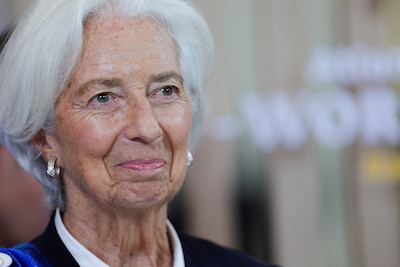
ECB President Christine Lagarde to step down in early 2027, ahead of term end

ECB President Christine Lagarde to step down in early 2027, ahead of term end

European Central Bank President Christine Lagarde will step down from her role on February 7, 2027, ahead of her term's official end. Former De Nederlandsche Bank president Klaas Knot is currently being discussed as a potential successor for the position.

Gas prices keep rising, where will it end? ‘It is deafeningly quiet in The Hague’

Gas prices keep rising, where will it end? ‘It is deafeningly quiet in The Hague’

Natural gas prices in the Netherlands have risen sharply to over 2 euros per cubic meter, driven by geopolitical instability in the Middle East. With no government price cap currently active, many households face significantly higher energy bills as their contracts expire, although experts confirm that supply security remains unaffected.