ad

Man claiming tinnitus from MRI at UMC Utrecht loses court case

Man claiming tinnitus from MRI at UMC Utrecht loses court case

An Amsterdam man has lost a court case against UMC Utrecht in which he sought information and facility access to prove the hospital caused his tinnitus during an MRI scan. The court denied all his requests, citing concerns over employee privacy and a lack of evidence that the requested documents exist.

A resident of Amsterdam has failed in his legal attempt to force UMC Utrecht to provide evidence regarding an MRI scan he underwent in October 2025. The man claims he developed severe tinnitus following the procedure and sought internal work instructions, the names of the technicians involved, and access to the specific MRI room to build a liability case. The court rejected all of his requests, citing a lack of urgent interest and the protection of employee privacy.

The judge ruled that the hospital is not required to share documentation, noting that UMC Utrecht maintains that its MRI staff receives oral rather than written instructions. Furthermore, the court determined that a visit to the MRI suite was unnecessary because the room has since been renovated and the equipment used during the man's examination replaced. The court did not issue a ruling on the hospital's potential liability for the patient's condition, but the claimant was ordered to cover the legal costs of the proceedings.

Based on reporting by ad. Translated and condensed by LocalHeadlines.

Related articles

Motorcyclist and driver injured in collision on Haarlemmerweg

Motorcyclist and driver injured in collision on Haarlemmerweg

A car and a motorcycle collided at the intersection of Haarlemmerweg and Australiëhavenweg in Amsterdam, resulting in injuries to both drivers. Both individuals were hospitalized, and the police have closed the scene to investigate the cause of the accident.

More spaces for legal drug use: aid organization pleased with new approach

More spaces for legal drug use: aid organization pleased with new approach

Amsterdam is expanding its network of supervised drug-use facilities and overnight shelters to better support addicts and reduce street-level nuisance. The initiative includes implementing personalized care plans and potentially establishing new facilities in the Oost district by 2027.

Jouke (24) is a student and informal caregiver, now he helps fellow students in Amsterdam

Jouke (24) is a student and informal caregiver, now he helps fellow students in Amsterdam

Jouke de Jong, a 24-year-old student at the Hogeschool van Amsterdam, has founded the WeCARE platform to provide support and community for students who are also caregivers. By sharing personal experiences and offering resources, the initiative aims to reduce the loneliness often felt by students balancing family care duties with their academic studies.

More consumption rooms, extra shelters and tougher measures: this is how the city council wants to tackle drug nuisance

More consumption rooms, extra shelters and tougher measures: this is how the city council wants to tackle drug nuisance

Amsterdam's city government is launching a six-million-euro initiative to address rising drug-related public nuisance by increasing supervised consumption spaces and expanding homeless shelter capacity. The strategy also includes a stricter enforcement policy for repeat offenders and a potential repatriation program for certain EU-based addicts.

Life discovered on Rembrandt's The Night Watch: Japanese bacterium from 2013

Life discovered on Rembrandt's The Night Watch: Japanese bacterium from 2013

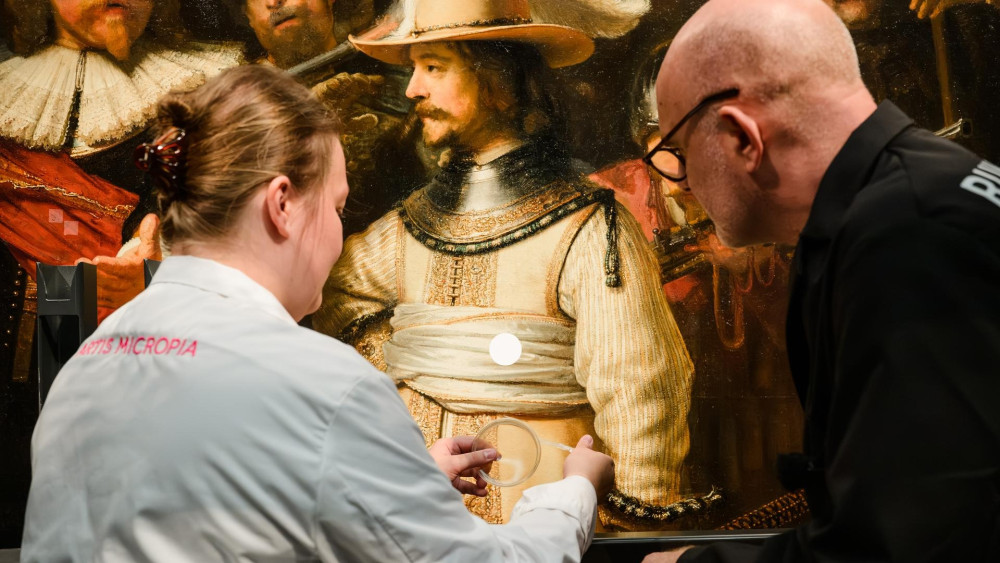
Microbiologists from Micropia and the Rijksmuseum have identified various bacteria living on Rembrandt's The Night Watch, including a strain previously discovered at a Japanese refinery. These findings, which showcase the unexpected intersection of art and microbiology, are currently on public display at Micropia in Amsterdam.