ad

Dutch citizens must be able to survive for 72 hours, but emergency broadcaster falls short
Dutch citizens must be able to survive for 72 hours, but emergency broadcaster falls short

The Dutch government urges citizens to prepare for 72 hours of self-sufficiency during emergencies, but regional disaster broadcasters currently lack the fuel reserves to maintain service for that period. Officials are now working to establish new agreements to secure backup fuel and infrastructure, as the government faces criticism for demanding preparedness from the public that its own systems cannot yet support.

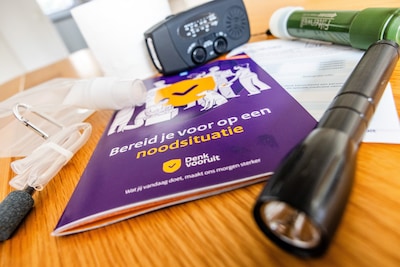
The Dutch government currently advises citizens to prepare for 72 hours of self-sufficiency during emergencies, including possessing an emergency radio to tune into regional disaster stations. However, it has emerged that these regional broadcasters are not currently equipped to remain operational for that duration. While the stations utilize backup generators, they lack the necessary fuel reserves to power them for three full days. Furthermore, the transmission towers required to broadcast these signals also face challenges regarding sustained backup power and fuel logistics.

Government officials and regional broadcasters acknowledge that clearer agreements are required to ensure continuous service, particularly concerning the prioritization of fuel supplies during crises. The Ministry of Education, Culture and Science is currently assessing the needs of these broadcasters to address the issue, although the process is described as a complex puzzle. While local media outlets affirm their readiness to provide news during emergencies, they remain dependent on government-led infrastructure support, leaving a gap between the government's official preparedness guidelines and its own operational capabilities.

Based on reporting by ad. Translated and condensed by LocalHeadlines.

Related articles

European Commission launches investigation into Booking.com over failure to tackle fraud

European Commission launches investigation into Booking.com over failure to tackle fraud

The European Commission has opened an investigation into Booking.com over concerns that the travel platform is failing to adequately combat fraud and phishing scams. The inquiry aims to ensure the company complies with the Digital Services Act, which mandates that online platforms prioritize user protection and transparency.

China and the US are going full throttle on AI, the EU is hitting the brakes: how wise is that?

China and the US are going full throttle on AI, the EU is hitting the brakes: how wise is that?

While China and the United States push ahead with rapid AI development, the European Union maintains a cautious stance focused on strict regulation. Critics argue this approach hampers European innovation and sovereignty, while proponents believe responsible testing and a focus on specialized quality are essential for sustainable growth.

Seizure of 'Antifa server' at US request leads to questions and concerns

Seizure of 'Antifa server' at US request leads to questions and concerns

Dutch authorities have seized a server belonging to the Italian hosting provider Autistici/Inventati at the request of the United States. The U.S. government classifies the company as a terrorist entity, sparking concerns among Dutch digital rights groups and industry associations regarding the precedent for such cross-border legal actions.

Police seize server at data center in Amsterdam-Oost at the request of the US

Police seize server at data center in Amsterdam-Oost at the request of the US

Police in Amsterdam have seized a server from a data center in the city's eastern district at the request of the United States. The action targets an Italian internet provider suspected by American authorities of facilitating the antifascist movement antifa.

EU selects 46 raw materials projects to reduce dependence on China

EU selects 46 raw materials projects to reduce dependence on China

The European Commission has launched 46 projects across sixteen countries to reduce reliance on China for vital raw materials like lithium and copper. These initiatives, supported by prioritized permits and funding assistance, aim to significantly boost domestic processing and recycling capacity by 2030.