Vibrations forbidden in new VU building: "We measure down to the billionth of a second"
The Vrije Universiteit in Amsterdam has opened a new research building designed with advanced concrete foundations to block vibrations from nearby traffic and public transport. These specialized measures allow scientists to perform highly precise physics and biomedical experiments that would otherwise be disrupted by environmental interference.
The Vrije Universiteit in Amsterdam has officially opened a sophisticated new research facility specifically engineered to eliminate external vibrations. Construction on the project began in 2017 to provide a stable environment for sensitive physics and biomedical experiments. To shield laboratory equipment from the noise and movement caused by nearby traffic on the A10 motorway, trains, and trams, engineers installed massive concrete blocks weighing 350,000 kilograms each in the building's basement, alongside a 26-meter-deep foundation wall.
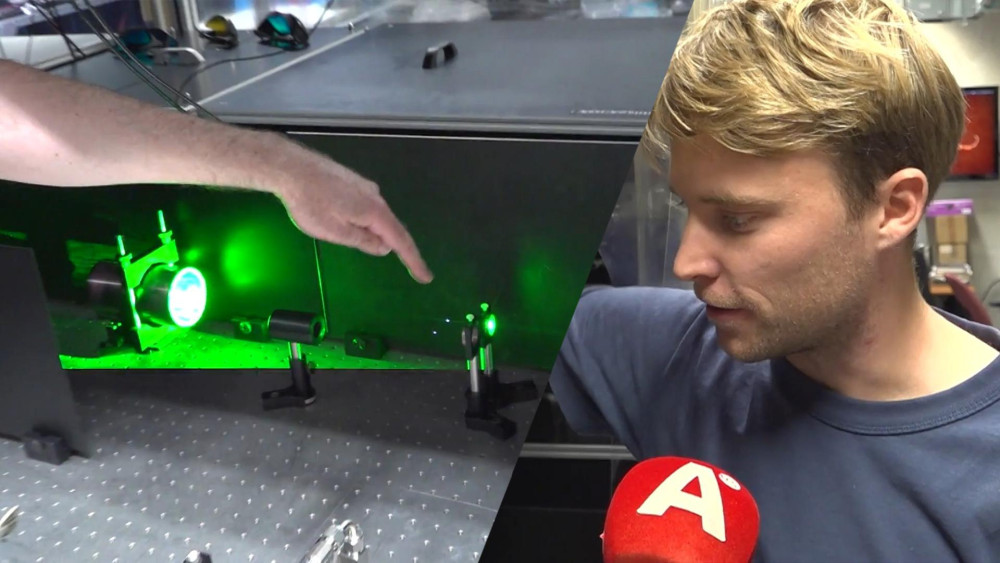
Physics professor and laser lab director Kjeld Eikema noted that the facility is necessary because researchers must often conduct measurements with a precision of one billionth of a second. Although the chosen location experiences high levels of environmental vibration, officials argued that finding a quieter site in the Netherlands would be nearly impossible without relocating to a remote area. Consequently, the university integrated these advanced vibration-dampening technologies directly into its existing campus infrastructure to ensure that sensitive experimental work remains undisturbed by urban activity.
Based on reporting by rss. Translated and condensed by LocalHeadlines.