parool

A cover letter with your bid? Sellers at Open House Day in Amsterdam don't even read them: 'It's all about the best price'
A cover letter with your bid? Sellers at Open House Day in Amsterdam don't even read them: 'It's all about the best price'

During the Open Huizen Dag in Amsterdam, sellers are prioritizing the highest financial bids over personal motivation letters from prospective buyers. Despite concerns about a cooling housing market and high interest rates, homeowners remain focused on achieving the best possible price for their properties.

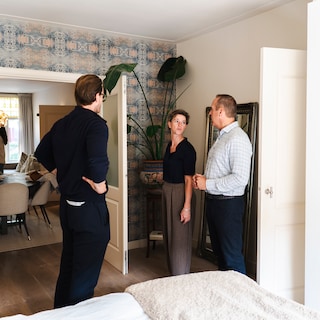
During the semi-annual Open Huizen Dag, homeowners in Amsterdam are prioritizing financial offers over personal sentiment. Sellers like Noranne Oudeman and Bob de Vries, who are selling their apartment in De Pijp to fund upcoming travels, explicitly stated that they would not consider lower bids accompanied by personal motivation letters. With over 14,000 homes participating in the event nationwide, the market remains active despite concerns regarding interest rates and affordability, though the number of lower-priced homes participating in the city remains limited.

Other sellers, such as a resident of the Gerard Doustraat, confirmed that letters from potential buyers are often ignored in favor of higher financial bids. While the Amsterdam housing market shows signs of cooling due to prolonged high mortgage rates, those participating in the open house event are still seeing interest. Many sellers are looking to relocate outside the city, and some have already secured promising bids ahead of the event's conclusion.

Based on reporting by parool. Translated and condensed by LocalHeadlines.

Related articles

Ramez Ramzy (33) had to sell half of his hospitality empire: 'Of course I look in the mirror to see what went wrong. But I'm not dwelling on it'

Ramez Ramzy (33) had to sell half of his hospitality empire: 'Of course I look in the mirror to see what went wrong. But I'm not dwelling on it'

Entrepreneur Ramez Ramzy has sold nearly half of his hospitality businesses following a period of over-expansion after the pandemic. He is now focused on improving the value of his remaining venues rather than acquiring new ones.

Halsema: number of tourists must be curbed, even if it costs the hospitality industry visitors

Halsema: number of tourists must be curbed, even if it costs the hospitality industry visitors

Amsterdam Mayor Femke Halsema has stated that the city must actively reduce the number of annual tourists to protect local livability and curb negative issues like waste. Although she acknowledges that limiting visitors may negatively affect hospitality revenue, she argues that the environmental and social costs of mass tourism are no longer sustainable.

Financial milestones every expat hits in their first couple of years in the Netherlands

Financial milestones every expat hits in their first couple of years in the Netherlands

Expats moving to the Netherlands must navigate various financial milestones, starting with basic administrative requirements like obtaining a BSN number and opening a local bank account. Over time, these steps evolve into more significant life decisions, such as purchasing a home and planning for the long-term expiration of specific tax benefits.

Katwijk gives green light: US multibillion-dollar obesity drug plant approved

Katwijk gives green light: US multibillion-dollar obesity drug plant approved

The municipality of Katwijk has approved the construction of a large-scale Eli Lilly pharmaceutical factory focused on obesity and diabetes medication. The project is supported by a 100 million euro government deal to improve local infrastructure and housing, though it faces ongoing scrutiny over high water and energy consumption.

Amsterdam network GasTerug warns as energy prices rise again: The urgency is greater than ever

Amsterdam network GasTerug warns as energy prices rise again: The urgency is greater than ever

The Amsterdam-based network GasTerug is calling on residents to reduce their energy consumption as gas prices rise again. They suggest that setting thermostats to 18 degrees is an essential and urgent step to combat the increased costs.