ad

Cabinet plans to require homeowners to install hybrid heat pumps starting in 2029
Cabinet plans to require homeowners to install hybrid heat pumps starting in 2029

Beginning in 2029, homeowners in the Netherlands must install hybrid heat pumps instead of gas-fired boilers when replacing their heating systems. The government plans to exempt apartments and monuments, while a decision on future subsidies for these costly installations is expected by 2027.

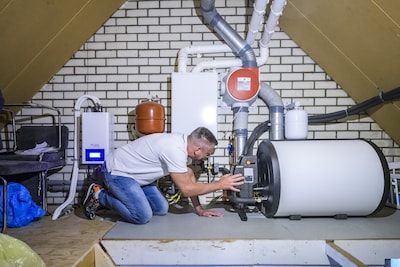
Starting in 2029, the Dutch government plans to mandate that homeowners install hybrid heat pumps when replacing their existing gas-fired central heating boilers. This policy, proposed by Minister Elanor Boekholt-O’Sullivan, is intended as a transitional step toward meeting climate goals for 2050. Residents are not required to replace functioning boilers immediately; the obligation only triggers when a replacement becomes necessary at the end of a unit's lifecycle. Apartments and historic monuments are currently exempt from the requirement due to technical constraints and the potential for more efficient collective heating solutions in multi-unit buildings.

The transition comes with a significant financial impact, as hybrid heat pumps typically cost between 4,000 and 7,000 euros, compared to 2,000 euros for a traditional boiler. While the government suggests that lower energy bills could offset these costs within ten years, there is no confirmed budget for subsidies for the policy after 2030. Decisions regarding potential financial support are expected in early 2027, with final legislation anticipated later that year.

Based on reporting by ad. Translated and condensed by LocalHeadlines.

Related articles

VNO-NCW chief warns unions and cabinet: 'We are heading down the Belgian path this way'

VNO-NCW chief warns unions and cabinet: 'We are heading down the Belgian path this way'

VNO-NCW chairman Coen van Oostrom has warned the Dutch government and labor unions that the current economic model is unsustainable and risks leading the country toward a decline similar to Belgium. He calls for urgent structural reforms, including a more efficient social security system and proactive measures to retrain workers for the future of artificial intelligence.

Cabinet opens purse strings to tackle poor regional accessibility: 300 million for self-driving buses and more

Cabinet opens purse strings to tackle poor regional accessibility: 300 million for self-driving buses and more

The Dutch government plans to invest 300 million euros annually from 2030 to improve regional public transport accessibility and address staff shortages. Key measures include testing autonomous buses and centralizing demand-responsive transport services to replace lost transit routes.

Norway to temporarily ban AI glasses in crowded places

Norway to temporarily ban AI glasses in crowded places

Norway is introducing a temporary ban on AI smart glasses in busy public spaces due to privacy concerns regarding unauthorized recording. The Netherlands is also debating the issue, with local retailers pulling the products from shelves as the government investigates potential legal restrictions.

Cabinet plan to protect children online: 'They are facing unacceptable risks'

Cabinet plan to protect children online: 'They are facing unacceptable risks'

The Dutch government has unveiled a new strategy to protect children online, focusing on curbing harmful social media design, evaluating an EU-wide age limit for platforms, and banning mobile phones in all schools. The initiative also prioritizes combatting online radicalization among youth and ensuring that future digital safety measures involve input from both parents and children.

Waste bin full? Future sensors may sound the alarm

Waste bin full? Future sensors may sound the alarm

The municipality is testing fill-level sensors in waste containers to optimize collection routes and reduce trash accumulation on streets. A pilot project is currently underway, with plans to potentially expand the use of this technology across the city by early 2028.