nu

Public Prosecution Service was poorly protected against cyberattacks for years

Public Prosecution Service was poorly protected against cyberattacks for years

An investigation has concluded that the Dutch Public Prosecution Service failed to adequately protect its ICT systems for years, leaving them vulnerable to cyberattacks. A security flaw in Citrix software allowed hackers to infiltrate the network last July, resulting in the delay of thousands of court cases and highlighting long-standing neglected warnings about outdated technology.

The Dutch Public Prosecution Service (OM) faced severe criticism after an investigation revealed its ICT systems were inadequately protected for years. The agency suffered a significant cyberattack last July, which was facilitated by a vulnerability in Citrix NetScaler software. This breach granted hackers unauthorized access to the network for approximately one month, causing disruptions that resulted in the postponement of thousands of legal proceedings.

Although forensic experts believe sensitive mailbox data remained secure, the lack of robust monitoring made it difficult to determine the full extent of the intrusion. Commission chair Jaap Smit noted that internal warnings about outdated systems had been ignored for years, effectively hitting the snooze button on critical security updates. While the agency has since increased its focus on digital infrastructure, officials emphasize that substantial additional capacity and priority are required to prevent future vulnerabilities and ensure the integrity of the judicial process.

Based on reporting by nu. Translated and condensed by LocalHeadlines.

Related articles

VNO-NCW chief warns unions and cabinet: 'We are heading down the Belgian path this way'

VNO-NCW chief warns unions and cabinet: 'We are heading down the Belgian path this way'

VNO-NCW chairman Coen van Oostrom has warned the Dutch government and labor unions that the current economic model is unsustainable and risks leading the country toward a decline similar to Belgium. He calls for urgent structural reforms, including a more efficient social security system and proactive measures to retrain workers for the future of artificial intelligence.

Cabinet plans to require homeowners to install hybrid heat pumps starting in 2029

Cabinet plans to require homeowners to install hybrid heat pumps starting in 2029

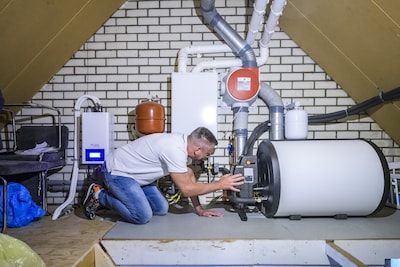
Beginning in 2029, homeowners in the Netherlands must install hybrid heat pumps instead of gas-fired boilers when replacing their heating systems. The government plans to exempt apartments and monuments, while a decision on future subsidies for these costly installations is expected by 2027.

Cabinet opens purse strings to tackle poor regional accessibility: 300 million for self-driving buses and more

Cabinet opens purse strings to tackle poor regional accessibility: 300 million for self-driving buses and more

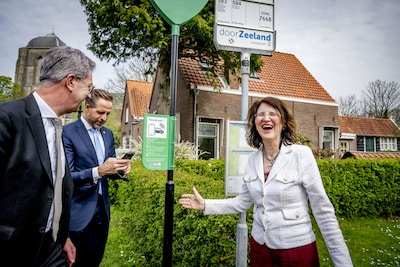
The Dutch government plans to invest 300 million euros annually from 2030 to improve regional public transport accessibility and address staff shortages. Key measures include testing autonomous buses and centralizing demand-responsive transport services to replace lost transit routes.

Norway to temporarily ban AI glasses in crowded places

Norway to temporarily ban AI glasses in crowded places

Norway is introducing a temporary ban on AI smart glasses in busy public spaces due to privacy concerns regarding unauthorized recording. The Netherlands is also debating the issue, with local retailers pulling the products from shelves as the government investigates potential legal restrictions.

Cabinet plan to protect children online: 'They are facing unacceptable risks'

Cabinet plan to protect children online: 'They are facing unacceptable risks'

The Dutch government has unveiled a new strategy to protect children online, focusing on curbing harmful social media design, evaluating an EU-wide age limit for platforms, and banning mobile phones in all schools. The initiative also prioritizes combatting online radicalization among youth and ensuring that future digital safety measures involve input from both parents and children.