parool

Municipality, our local market in the Kinkerbuurt needs clarity to survive
Municipality, our local market in the Kinkerbuurt needs clarity to survive

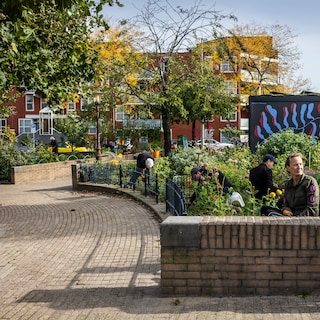
A local volunteer organizer is calling on the municipality of Amsterdam to provide clarity regarding the future of neighborhood funding, which is essential for maintaining community initiatives like the Kinkerbuurt market. Recent changes to budget policies have created uncertainty, threatening the continuation of volunteer-led projects that foster local social cohesion.

For the past four years, a local volunteer has organized a chess tournament and community market at the Nicolaas Beetsplantsoen in Amsterdam-West. The event features 55 stalls run by local residents and serves as a vital gathering space for hundreds of neighbors. The organizer has relied on municipal neighborhood budgets to fund these initiatives, but recent changes to funding policies have created significant uncertainty regarding the future of such projects.

The organizer criticizes the municipality for failing to provide clear communication or transition plans regarding the end of current neighborhood budget systems. With months of preparation required to coordinate these volunteer-led events, the lack of transparency threatens the sustainability of community efforts across the city. The organizer is now calling on the municipality of Amsterdam to take local initiatives more seriously, urging officials to provide timely guidance and clear funding structures to ensure that these valuable community bonds are not dismantled by inconsistent policies and poor communication.

Based on reporting by parool. Translated and condensed by LocalHeadlines.

Related articles

Harry Styles concert series in Arena fueled inflation in the Netherlands

Harry Styles concert series in Arena fueled inflation in the Netherlands

A series of concerts by Harry Styles at the Johan Cruijff Arena in Amsterdam significantly pushed up Dutch inflation in May due to high demand for local services. Increased spending on hotel rooms and concert tickets, driven by a large influx of international visitors, contributed to the highest hotel-related inflation impact since 2011.

Housing, industry and nature: who gets the space along the North Sea Canal?

Housing, industry and nature: who gets the space along the North Sea Canal?

The Noordzeekanaal area is experiencing increasing pressure as industrial needs, new housing projects, and nature conservation compete for limited space. A new television series commemorates the canal's 150th anniversary by exploring how these different sectors coexist and evolve within the region.

This won't be a hit piece on people in the Zuidas, I say on the way to the Green Business Club Zuidas anniversary

This won't be a hit piece on people in the Zuidas, I say on the way to the Green Business Club Zuidas anniversary

The Green Business Club Zuidas recently celebrated its fifteenth anniversary of promoting sustainability efforts within the Zuidas business district in Amsterdam. While the organization has made significant progress in greening the area, observers note that further engagement from corporate clients remains a key objective.

The Greenhouse | Here is how our energy system was overhauled before

The Greenhouse | Here is how our energy system was overhauled before

Amsterdam is embarking on a significant expansion of its electrical infrastructure to accommodate a projected multi-fold increase in energy demand. The project involves upgrading existing substations, building new ones, and adding thousands of small utility structures across the city to support the growing grid.

Halsema: number of tourists must be curbed, even if it costs the hospitality industry visitors

Halsema: number of tourists must be curbed, even if it costs the hospitality industry visitors

Amsterdam Mayor Femke Halsema has stated that the city must actively reduce the number of annual tourists to protect local livability and curb negative issues like waste. Although she acknowledges that limiting visitors may negatively affect hospitality revenue, she argues that the environmental and social costs of mass tourism are no longer sustainable.