ad

200-meter wind turbines must be 400 meters from homes, new government standard announced
200-meter wind turbines must be 400 meters from homes, new government standard announced

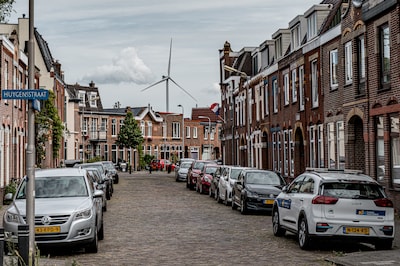
The Dutch government has established a new minimum distance rule for land-based wind turbines, requiring them to be located at least twice their tip height away from residential homes. The policy seeks to address resident health concerns and noise issues while providing clear guidelines to support the country's ongoing energy transition.

The Dutch government has introduced a new national standard for the placement of land-based wind turbines, requiring a minimum distance from homes equal to twice the turbine tip height. This policy, announced by State Secretary Annet Bertram, aims to balance the urgent need for sustainable energy with concerns regarding the living environment and potential noise or shadow nuisance for nearby residents. If a wind turbine reaches a total height of 200 meters, it must be situated at least 400 meters away from residential buildings.

This decision follows years of regulatory uncertainty caused by a court ruling that struck down previous environmental rules due to a lack of proper assessment. While the new regulation provides a standard, the government has included a provision that allows for deviations to shorter distances, acknowledging the competing pressures of housing development and the energy transition. Further regulations concerning light reflection and sound are expected to be presented to the House of Representatives by the end of the year.

Based on reporting by ad. Translated and condensed by LocalHeadlines.

Related articles

EU selects 46 raw materials projects to reduce dependence on China

EU selects 46 raw materials projects to reduce dependence on China

The European Commission has launched 46 projects across sixteen countries to reduce reliance on China for vital raw materials like lithium and copper. These initiatives, supported by prioritized permits and funding assistance, aim to significantly boost domestic processing and recycling capacity by 2030.

Public Prosecution Service was poorly protected against cyberattacks for years

Public Prosecution Service was poorly protected against cyberattacks for years

An investigation has concluded that the Dutch Public Prosecution Service failed to adequately protect its ICT systems for years, leaving them vulnerable to cyberattacks. A security flaw in Citrix software allowed hackers to infiltrate the network last July, resulting in the delay of thousands of court cases and highlighting long-standing neglected warnings about outdated technology.

VNO-NCW chief warns unions and cabinet: 'We are heading down the Belgian path this way'

VNO-NCW chief warns unions and cabinet: 'We are heading down the Belgian path this way'

VNO-NCW chairman Coen van Oostrom has warned the Dutch government and labor unions that the current economic model is unsustainable and risks leading the country toward a decline similar to Belgium. He calls for urgent structural reforms, including a more efficient social security system and proactive measures to retrain workers for the future of artificial intelligence.

Cabinet plans to require homeowners to install hybrid heat pumps starting in 2029

Cabinet plans to require homeowners to install hybrid heat pumps starting in 2029

Beginning in 2029, homeowners in the Netherlands must install hybrid heat pumps instead of gas-fired boilers when replacing their heating systems. The government plans to exempt apartments and monuments, while a decision on future subsidies for these costly installations is expected by 2027.

Cabinet opens purse strings to tackle poor regional accessibility: 300 million for self-driving buses and more

Cabinet opens purse strings to tackle poor regional accessibility: 300 million for self-driving buses and more

The Dutch government plans to invest 300 million euros annually from 2030 to improve regional public transport accessibility and address staff shortages. Key measures include testing autonomous buses and centralizing demand-responsive transport services to replace lost transit routes.